🎯 Key Points
- Digestion order: Mouth (salivary amylase) → Stomach (pepsin, HCl) → Small intestine (trypsin, lipase, bile — the main site of digestion AND absorption) → Large intestine (water absorption, vitamin K/B12 made by bacteria)
- Bile (made in liver, stored in gallbladder) does NOT digest fat itself — it only emulsifies fat into smaller droplets, increasing surface area for lipase to act on
- Pancreatic protein-digesting enzymes are secreted as INACTIVE zymogens (trypsinogen, chymotrypsinogen), activated only inside the intestine by enterokinase — this protects the pancreas from digesting its own tissue
- GI hormones coordinate digestion: Gastrin (stomach, stimulates HCl release), Secretin (duodenum, stimulates pancreatic bicarbonate), CCK (duodenum, stimulates bile and pancreatic enzyme release)
- Absorbed glucose and amino acids enter the hepatic portal vein, going DIRECTLY to the liver before reaching general circulation; absorbed fats instead enter lymphatic lacteals, bypassing the liver initially
The Digestive Tract
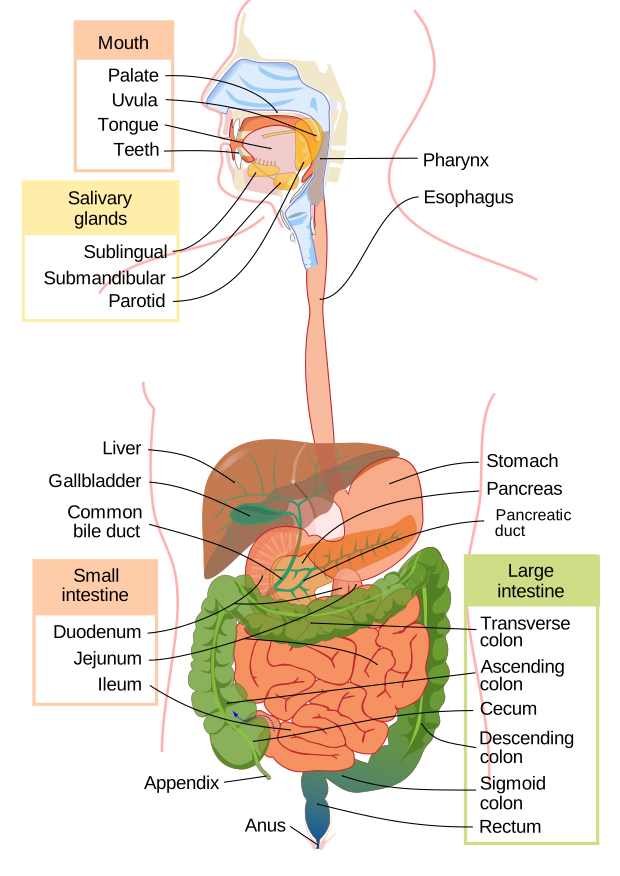
The human digestive system. Image: LadyofHats (Mariana Ruiz), Public Domain, via Wikimedia Commons.
- Mouth: salivary amylase (ptyalin) begins starch digestion (starch → maltose)
- Stomach: pepsin digests proteins; HCl (maintains pH ~2, activates pepsinogen, kills most bacteria); gastric lipase begins minor fat digestion; chief cells secrete pepsinogen, parietal cells secrete HCl
- Small intestine: receives pancreatic juice (trypsin, chymotrypsin, amylase, lipase) and bile; this is BOTH the main site of digestion completion and the main site of nutrient absorption, via finger-like villi and their microvilli (brush border) that massively increase surface area
- Large intestine: absorbs water and some minerals; resident bacteria synthesise vitamin K and vitamin B12, which the body then absorbs
Digestive Enzymes and Their Sites of Action
- Salivary amylase (ptyalin): mouth; starch to maltose
- Pepsin: stomach (activated from pepsinogen by HCl); proteins to peptones and proteoses
- Trypsin and chymotrypsin: small intestine (secreted as inactive trypsinogen/chymotrypsinogen by the pancreas, activated by enterokinase); proteins/peptones to peptides
- Pancreatic amylase: small intestine; starch to maltose; pancreatic lipase: small intestine; emulsified fats to fatty acids and glycerol (bile salts emulsify fat first)
- Intestinal enzymes (succus entericus): maltase, lactase, sucrase (disaccharides to monosaccharides); dipeptidases (dipeptides to amino acids); nucleases (nucleic acids to nucleotides)
Hormonal Regulation of Digestion
- Gastrin: secreted by stomach cells in response to food; stimulates parietal cells to release more HCl
- Secretin: secreted by the duodenum in response to acidic chyme arriving from the stomach; stimulates the pancreas to release bicarbonate-rich juice that neutralises this acid
- Cholecystokinin (CCK): secreted by duodenal I-cells in response to fats and proteins in chyme; stimulates gallbladder contraction (releasing stored bile) and pancreatic enzyme secretion
- This three-hormone system means digestion is self-regulating: each signal is triggered by the specific contents actually arriving, not by a fixed schedule
Liver Function and the Hepatic Portal System
- The liver produces bile continuously; it is stored and concentrated in the gallbladder until needed
- Bilirubin conjugation: the liver takes up bilirubin (a breakdown product of old RBC haemoglobin) and conjugates it (makes it water-soluble) for excretion in bile; impaired conjugation causes jaundice
- Hepatic portal vein: carries blood absorbed from the intestine (rich in glucose, amino acids, and other water-soluble nutrients) DIRECTLY to the liver before it joins the general circulation, so the liver can process/detoxify nutrients first
- Fats, in contrast, are absorbed into lymphatic vessels called lacteals (not blood capillaries) and only join the bloodstream later, bypassing this initial liver pass
Alimentary Canal and Dental Formula
- The alimentary canal runs mouth → buccal cavity → pharynx → oesophagus → stomach → small intestine → large intestine → rectum → anus; associated digestive glands are the salivary glands, liver and pancreas
- Human teeth are thecodont (each set in a socket of the jaw bone), diphyodont (two sets in a lifetime, milk and permanent), and heterodont (four types: incisors, canines, premolars, molars)
- Dental formula of an adult human is 2123/2123 (per half jaw: 2 incisors, 1 canine, 2 premolars, 3 molars), giving 32 permanent teeth; the hard chewing surface is made of enamel, the hardest substance in the body
- Stomach regions: cardiac (where oesophagus opens), fundic, body, and pyloric (opens into the duodenum)
- Small intestine parts: the C-shaped duodenum, the coiled jejunum, and the highly coiled ileum (main absorptive region with villi and microvilli)
- Large intestine parts: caecum (bears the vestigial vermiform appendix), colon (ascending, transverse, descending), and rectum; the colon mainly absorbs water and electrolytes
Absorption of Digested Products
- Passive absorption: small amounts of monosaccharides (like glucose), amino acids and some electrolytes such as chloride ions pass down their concentration gradient without energy
- Active absorption: glucose, amino acids and Na⁺ are absorbed against a gradient using carrier proteins and ATP energy (e.g. glucose is co-transported with Na⁺)
- Facilitated transport: fructose and some amino acids cross the membrane through carrier proteins without energy expenditure
- Fat absorption: fatty acids and glycerol are insoluble, so they are first packaged with bile salts into tiny droplets called micelles, absorbed into intestinal cells, re-formed into small fat globules coated with protein (chylomicrons), and passed into the lymphatic lacteals
- Absorption occurs in the mouth (some drugs), stomach (water, alcohol, simple drugs), small intestine (the MAJOR site, most nutrients) and large intestine (water, some minerals and drugs)
Assimilation, Egestion and Calorific Values
- Assimilation: absorbed nutrients (amino acids, glucose, fats) are transported by blood to the tissues, where they are incorporated into cell constituents or used to release energy
- Egestion: undigested and unabsorbed material is temporarily stored in the rectum as faeces and expelled through the anus by a mass peristaltic movement (the defecation reflex)
- Calorific (energy) values: carbohydrate ≈ 4.1 kcal/g, protein ≈ 4.0 kcal/g, and fat ≈ 9.3 kcal/g; fats yield roughly twice the energy of carbohydrates or proteins per gram
Disorders of the Digestive System
- Protein-Energy Malnutrition (PEM): Kwashiorkor results from a protein-deficient diet after weaning (swollen belly, oedema, stunted growth) while Marasmus results from a diet deficient in BOTH proteins and calories (extreme thinning, wasted muscles, dry wrinkled skin)
- Jaundice: the liver is affected and the skin and eyes turn yellow due to deposition of bile pigments (bilirubin)
- Indigestion: food is not properly digested, leading to a feeling of fullness; caused by inadequate enzyme secretion, anxiety, food poisoning or overeating
- Vomiting: ejection of stomach contents through the mouth, controlled by the vomit centre in the medulla; a feeling of nausea precedes it
- Diarrhoea: abnormally frequent and watery bowel movements with reduced water absorption; can cause dangerous dehydration
- Constipation: faeces are retained in the colon as bowel movements become irregular and the faeces become hard and dry
🚀 NEET Advanced Edge
Why pancreatic enzymes are secreted as inactive zymogens: If trypsin and chymotrypsin were active inside the pancreas itself, they would digest the pancreas's own proteins (autolysis); secreting them as inactive trypsinogen/chymotrypsinogen, only converted to active form by enterokinase once safely inside the intestinal lumen, protects pancreatic tissue from self-destruction.
The hepatic "first-pass effect" and why it matters for orally taken drugs: Because absorbed substances from the intestine travel through the hepatic portal vein straight to the liver before reaching the rest of the body, the liver can metabolise (and sometimes substantially inactivate) a drug before it ever reaches general circulation — this first-pass effect is why some medications must be given by injection rather than as a pill, or require a much higher oral dose than an injected dose to achieve the same effect.
Worked reasoning: A patient shows jaundice (yellowing) with elevated UNCONJUGATED bilirubin specifically, while liver enzyme levels are otherwise normal. What does this suggest? Answer: The problem likely lies in the conjugation step itself (or excess RBC breakdown overwhelming a functioning liver), not general liver damage — since conjugated bilirubin being normal/low while unconjugated is high points to a bottleneck before or at conjugation, distinguishing this from liver-damage-related jaundice where BOTH forms typically rise.